
Burial Services
Burial Services
Human burial practices can be traced back as far as 100,000 years, making them one of humanity’s oldest and most enduring traditions. If you’d like to explore the wide variety of burial customs across cultures, be sure to visit the websites listed in the Resources section below.
Understanding Burial Services
We hold this time-honored practice in the highest regard. If you’d like to learn more about the burial options we provide, the information below will guide you. And if any questions arise, please don’t hesitate to call us—we’re here to help.
When choosing burial for a loved one, whether in the moment of loss or as part of advance planning, there are several important decisions to consider. One of the first steps is selecting a cemetery and the specific location within its grounds. You’ll also need to decide on a casket, and in many cases, a burial vault, as these are required by many cemeteries today. Later on—when the time feels right—you may also choose a headstone or marker and decide on the inscription. Throughout the process, our caring staff is available to support you and provide guidance with each choice.
An Open Invitation
We provide a variety of affordable burial service options to fit different needs and preferences. These may include a simple burial with only our staff present to oversee the interment, a graveside service conducted by a minister or celebrant, or a full traditional funeral followed by burial. Each option can be personalized to reflect the wishes of the family while remaining mindful of cost.
How to Plan a Burial Service
Burial rituals, in one form or another, have been part of human culture for thousands of years. No matter the era or location, societies across the globe have practiced some form of burial. In modern times, many people recognize graveside services through what they’ve seen portrayed in movies or on television. These depictions range from solemn and emotional to lighthearted, and while they give a sense of what such a service looks like, they can’t capture the deeply personal meaning behind the real experience.
When the time comes to arrange a graveside service for a loved one, it can feel overwhelming to move from general impressions to creating a ceremony that is truly significant and personal. This planning guide is designed to walk you through the key steps in the process and highlight important points to discuss with your funeral director. If you’d like more information, please reach out—our staff is always here to provide the guidance and answers you need.
What's Involved in Planning a Burial Service?
Setting personal reasons aside, it may be helpful to look at the practical steps involved in arranging a burial service. The process can be thought of in three main areas: selecting the cemetery and burial site, choosing a casket and (if required) a burial vault, and planning the specific details of the graveside ceremony.
Reasons to Hold a Burial Service
Simplicity
Many people today are drawn to simplicity—a life that feels natural, uncluttered, and focused on what truly matters. This longing is not new; throughout history, religious traditions such as Roman Catholic, Anglican, and Quaker communities have embraced simplicity as a guiding principle. In much the same way, graveside services reflect this desire. Their straightforward nature allows families to center on what is most meaningful: honoring a loved one with sincerity and grace.
Religious Requirements
For many families, the choice of burial is rooted in deeply held religious beliefs. In Christianity, for instance, burial is closely tied to the faith in the resurrection of the body, making it both a spiritual and ceremonial act. Likewise, in Jewish and Islamic traditions, burial is not only a long-standing practice but also a profound expression of religious and cultural commitment.
The Natural Setting
What more fitting place to honor a loved one’s life than in the beauty of nature—beneath the sky, among trees, or surrounded by flowers? Whatever type of cemetery you choose, the peace and comfort found in these natural surroundings can bring both emotional and spiritual solace during the service.
The Importance of Witnessing
Throughout history, every culture has included burial as part of its traditions, whether shaped by faith or social custom. Over time, this shared human experience has fostered a common understanding across the world: burial is a profound act of respect, made even more significant when it is carried out in the presence of witnesses.
When the time comes to make final arrangements for a loved one, many families are comforted to discover the value that a thoughtfully planned burial service can provide. In meeting with a funeral director, you’ll have the chance to review the options for graveside services and explore the three most common reasons families often choose this type of ceremony.
Selection of Cemetery & Burial Property
Before going too far into the details, it’s important to note that in some cases, a loved one may have already arranged and purchased a burial plot or mausoleum crypt. Sometimes, a relative from years past may even have secured a larger section of cemetery space for future family use. In either case, you’ll need to gather the necessary documents proving burial rights and bring them with you to your first meeting with the funeral director.
If no prior arrangements have been made, the responsibility of choosing a cemetery and selecting a burial space will fall to you. While today’s families have access to more information than ever before, purchasing cemetery property is not something most people do often. To help guide you, here are a few important points to understand:
Ownership of rights, not land: When you buy a burial plot, crypt, or columbarium niche, you are purchasing the right to inter one or more individuals there. The land itself remains under the care and ownership of the cemetery.
Ongoing care: A portion of your payment goes into an irrevocable fund that helps cover the perpetual upkeep of the cemetery grounds.
Cemetery by-laws: Burial and future visits will be subject to the rules and regulations established by the cemetery’s administration.
Cost considerations: Just like real estate, the price of cemetery property can vary widely depending on its location within the grounds. While advance planning may allow you to find resale opportunities, families making arrangements at the time of need may not benefit from these options.
Additional expenses: Beyond the cost of the burial property itself, there are other fees to consider, including the opening and closing of the grave, the purchase and installation of a marker or headstone, and the cost of a casket and burial vault.
Because of our strong relationships with local cemeteries, we can help simplify this process and guide you through each step with clarity and care.
Choosing a Casket & Vault
It’s often said that the casket is the most significant expense when arranging a burial. While that may be true in many cases, it doesn’t mean the purchase has to exceed what your family can manage. We offer a wide range of reasonably priced caskets and burial vaults, and our staff will work with you to ensure your loved one’s service remains within your budget.
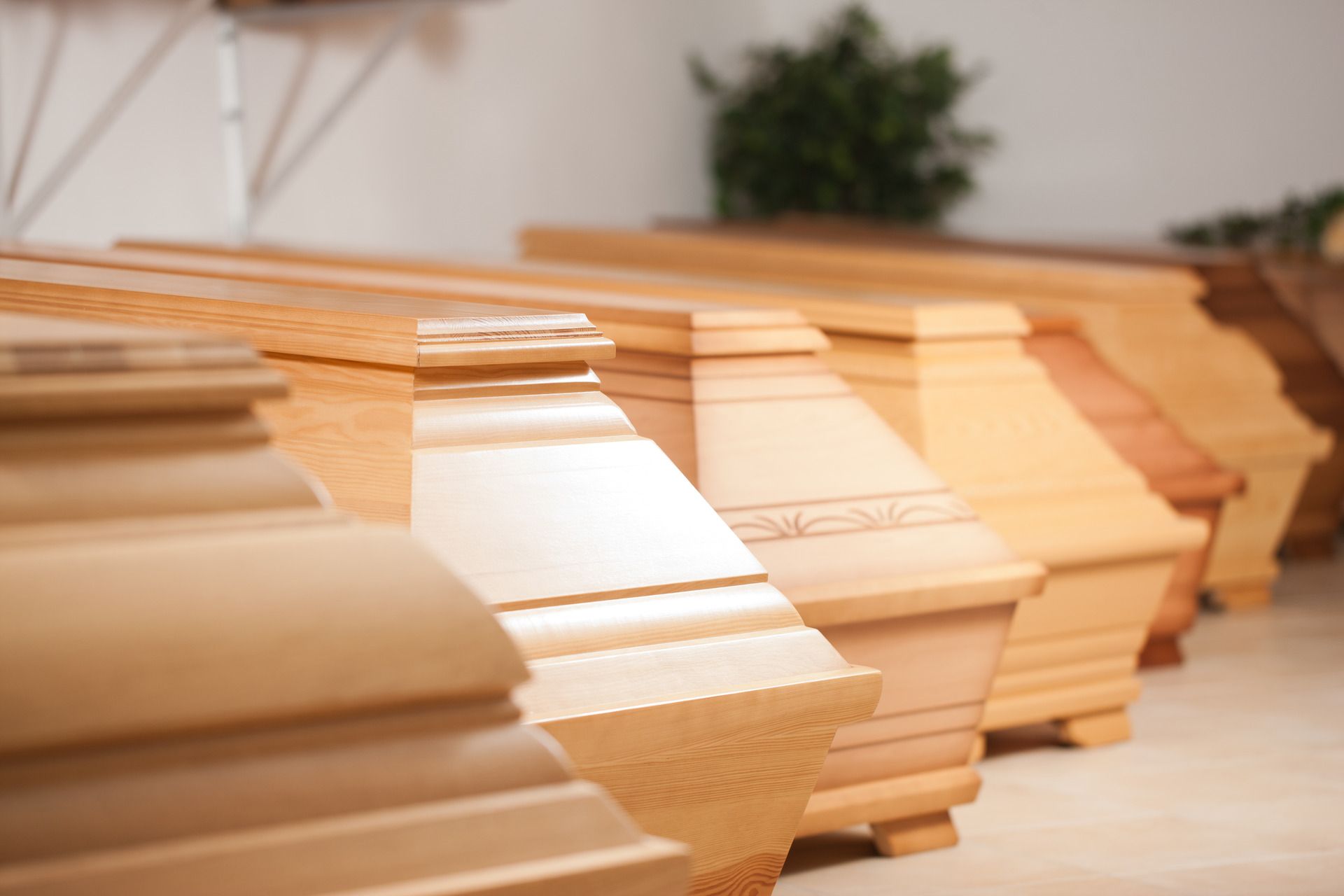
Beyond cost, the choice of casket is a deeply personal one. Some families prefer the natural beauty of hardwoods such as walnut, cherry, maple, oak, or pine. Others lean toward the strength and finish of metal caskets, which are available in different gauges and styles. Because this decision can feel overwhelming, we encourage you to lean on our experience. Our team is here to guide you through the options and help you select the casket and vault that best reflect your family’s wishes.
Planning the Details of the Graveside Service
The details of a burial service often depend on the needs and wishes of the family. For some, the goal is simplicity; for others, faith and tradition provide the guiding framework. Each approach creates a very different type of service, and both are equally meaningful.
While a graveside ceremony may resemble a shortened version of a traditional funeral—with hymns, prayers, or clergy involvement—it doesn’t have to follow that pattern. We encourage families to approach planning with an open mind. This allows room for creativity, flexibility, and the inclusion of personal touches that truly reflect your loved one’s life. Together, we’ll determine the most appropriate time and date, as well as choose the readings, music, or special moments that will bring the most comfort and meaning.
You’ll also decide who should lead the service. That role could be filled by a funeral director, clergy member, celebrant, or even a close family member or friend. While selecting the cemetery and burial plot are practical steps, designing the service itself is where the heart of the process lies. Your funeral director will spend time with you—listening, asking questions, and exploring the story of your loved one—to create a graveside ceremony that feels personal, genuine, and honoring.